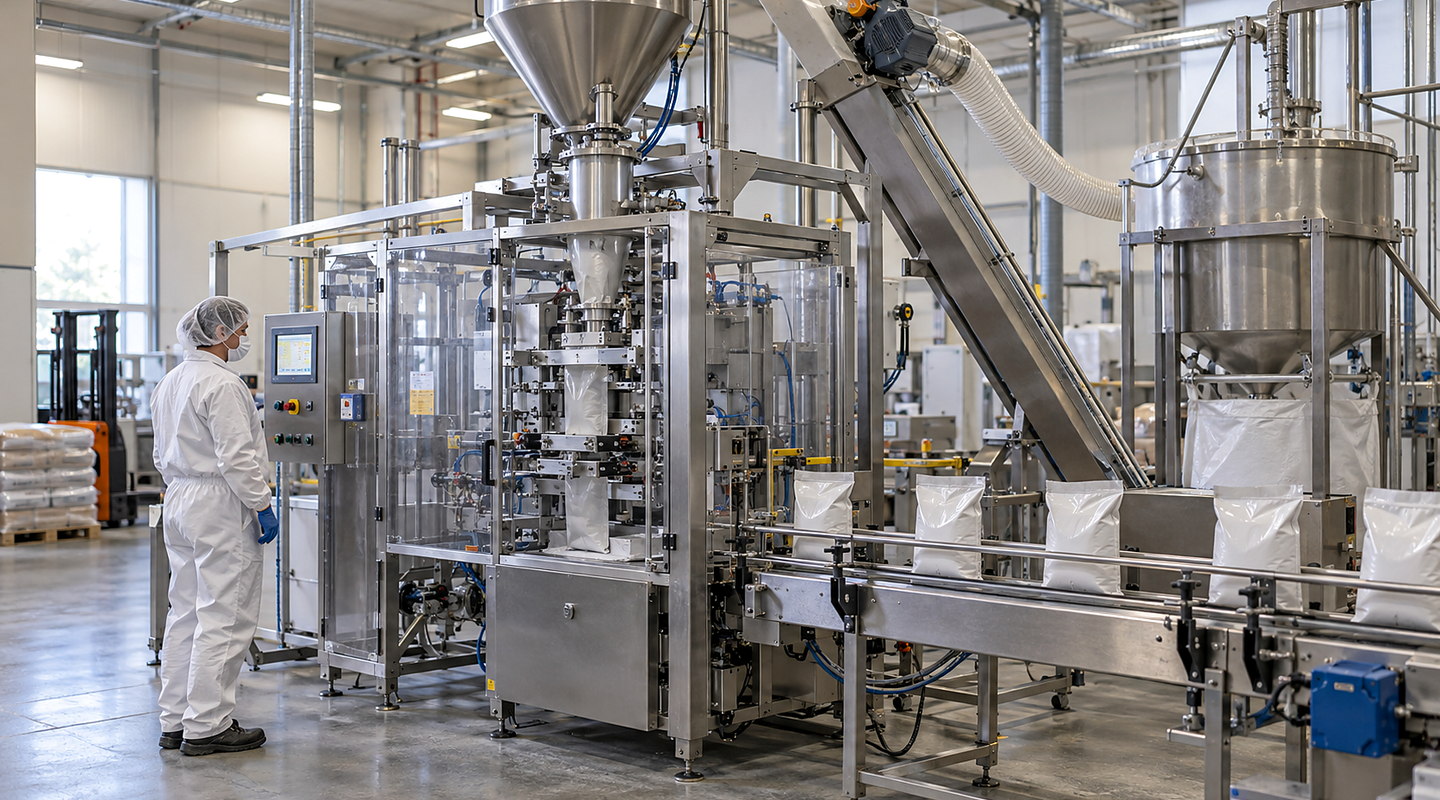
Snack Packing Machines: How the Process Works
Follow a snack from incoming sample to accepted sealed bag. Check what changes at feeding, weighing and discharge before assessing the bag, its seal and the first packs after a restart.
Assess snack packing as a complete route from product feeding and weighing through discharge, bag forming and sealing. Use representative snacks and packaging to compare product damage, dose variation, product left in transfers and the finished bag.
Include replenishment, short stops and flavour or format changes in the trial brief. The product-behaviour guide helps define the samples and observations needed.
Understand the complete route from input to accepted output — Snack Packing Machines
At each step record what enters, what leaves and which result belongs to that stage. A broken piece already present in the feed and a piece damaged on discharge need different investigation.
Discuss your application

Four clear stages for snack packing machines
Keep the same trial conditions when comparing samples. Note the recipe, target weight, pack format, refill or stop, and the agreed weight, product-condition and seal checks.
- 01
Review Representative Product and Pack Samples
Share the snack range, normal fines and fragile pieces, target pack weights and actual bag or film specifications. Record the incoming product condition so later breakage or loss can be distinguished from what was already present.
- 02
Trial the Dosing, Handling or Closing Method
Compare feeding, weighing and discharge using the agreed snacks and packs. Record pack weight, transfer losses and damage; for mixes, check the agreed composition as well as total weight.
- 03
Integrate Infeed, Discharge, Controls and Access
Define each transfer into the weigher and bagging stage, the available space and services, and what happens when the connected equipment stops or cannot accept product. Agree who supplies and checks each interface.
- 04
Run Agreed Production and Changeover Checks
Run the agreed production pattern, including replenishment and relevant changes. Record accepted bags, rejects, product damage, seal-area condition and the first acceptable packs after restart or changeover.
Decisions and results stay connected
| Stage | What happens | What you can review |
|---|---|---|
| Review Representative Product and Pack Samples | Retain a sample of the incoming snack and record existing fines, fragile pieces, target weights and the proposed bag or film. | A labelled incoming sample and the agreed pack specification. |
| Trial the Dosing, Handling or Closing Method | Run the actual snack through feeding, weighing and discharge. Check for added breakage, retained product and variation in the delivered portion. | Incoming and bagged samples, recorded weights and observations at each transfer. |
| Integrate Infeed, Discharge, Controls and Access | Identify where product enters, how the bagging stage receives it and how the system will behave if the next stage stops. | An agreed transfer drawing and a list of who supplies and checks each interface. |
| Run Agreed Production and Changeover Checks | Compare accepted finished bags through a refill, a stop and a planned product or pack change. | Weight, seal and product-condition records, rejected bags and the first acceptable pack after restart. |
Keep connected responsibilities clear
Your final snack packing machines scope must also account for cleaning, access and changeover method, finished-pack checks and reject handling, current regulations and the conditions at your site.
- The selected method must be trialled with representative product and packaging.
- Supplier tolerances and product-condition changes can alter handling or fill behaviour.
- Equipment selection does not replace product, hygiene, packaging or regulatory validation.