Understand your requirement
Send product in the condition it reaches the line, target weights, bag sizes and film. Include a sample showing the level of breakage or fines the buyer accepts.
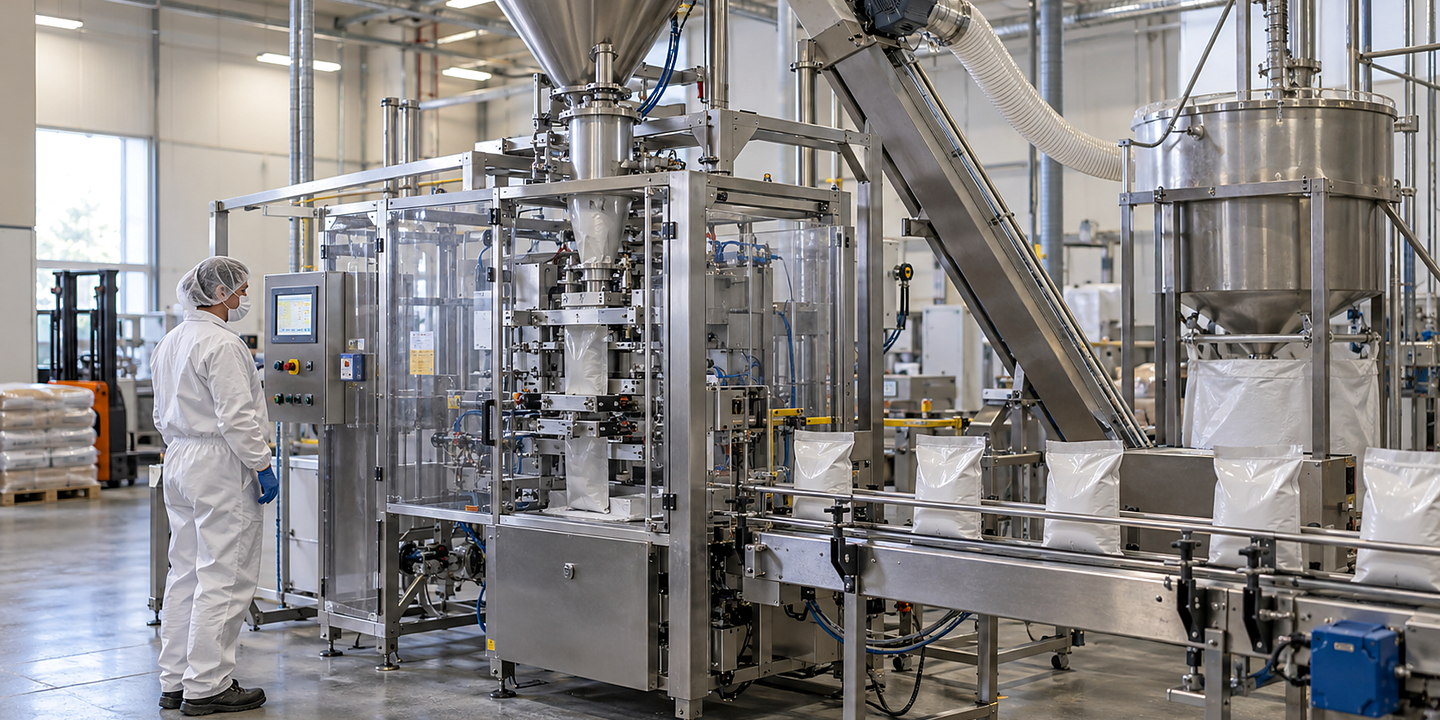
Compare practical options for snack weighing and bag forming, including what each route needs, where it fits and what to check before you decide.
Compare snack weighing and bagging routes using representative product, pack weights, packaging and the complete operating pattern. An option needs to show how feeding and discharge affect fragile pieces, how each dose reaches the bag and how the finished pack will be assessed.
Keep the required output, transfer losses, flavour changes and operator tasks visible in the comparison. Use the acceptance-testing guide to agree what evidence each proposed route must provide.
A proposal for weighing alone and a proposal that includes bag forming cover different work. Mark who owns the transfer into the bag, the finished-pack checks and the response when either stage stops.
Discuss your application

Send product in the condition it reaches the line, target weights, bag sizes and film. Include a sample showing the level of breakage or fines the buyer accepts.
Compare the condition and mix of the snacks before weighing, at discharge and in the finished bag. Count bags that pass both the weight and product checks.
Show the feed, transfer and bagging points on the line drawing. Identify who owns each handover and what happens to product when the downstream stage stops.
Agree how the team will check the first bags after a refill, flavour change or restart. Record accepted output separately from bags that need to be set aside.
Typical support: line concept, trials, filling or packaging equipment, integration and handover.
| Approach | Often suitable when | Watch for |
|---|---|---|
| Snack Packing Machines | You need a dedicated solution for a clearly defined duty, product or part range and line interface. | The selected method must be trialled with representative product and packaging. |
| Semi-Automatic Equipment for Lower-Volume or High-Changeover Work | Lower volumes or frequent snack and pack changes make operator-assisted feeding or handling worth comparing against a more integrated route. | Assess the complete operator workload, pack-weight consistency, fragile-product handling, replenishment and safe access using the intended production pattern. |
| Fully Automatic Line Integration where Repeatable Container Flow and Rate Justify It | The proposed snack and packaging range, replenishment arrangements and connected stages can support a repeatable integrated sequence demonstrated in a representative trial. | Include upstream and downstream stops, product retention, rejected packs, cleaning and restart checks. An automatic stage alone does not establish accepted output for the complete line. |