Routine Production Using Snack Weighing and Bag Forming
Use a representative run, including a refill, to compare incoming snack condition with packed product and to record weight, seal quality, rejects and accepted bags.
Explore this application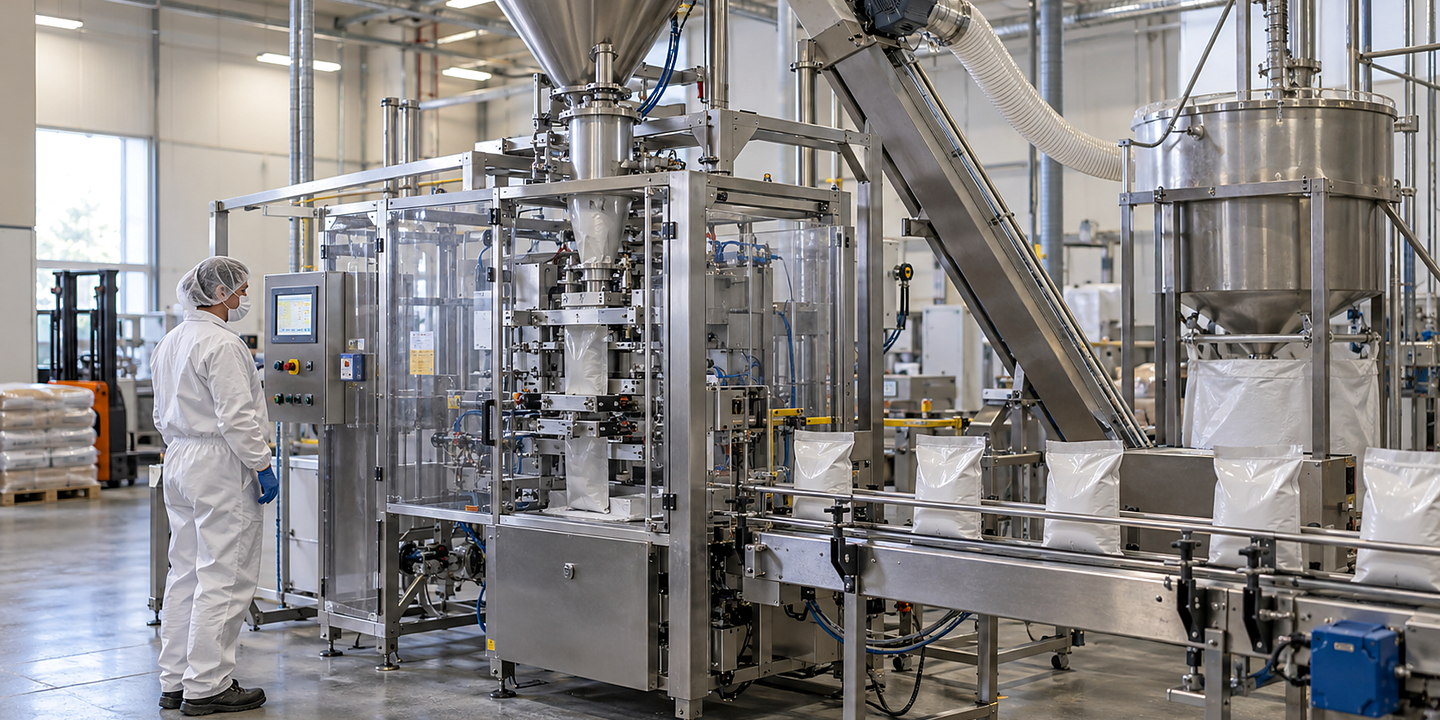
Choose the guide for your production pattern. A routine run tests how steadily good bags leave the line. A short run also needs to show what happens between the last acceptable bag of one recipe and the first of the next.
For a regular run, follow snacks through feeding, weighing, discharge and sealing. For a recipe or bag change, add clearance, settings and first-pack approval to that same route.
Use actual products and bags from your schedule. Include fragile pieces, fines or a mixed snack where they occur, and record the conditions that would make a finished bag unacceptable.
The two application guides use different evidence. Count accepted bags through replenishment on a longer run. When the product or format changes, record lost product, changeover work and the first acceptable bag.
Discuss your application

Use a representative run, including a refill, to compare incoming snack condition with packed product and to record weight, seal quality, rejects and accepted bags.
Explore this applicationChoose an awkward transition from the actual schedule. Identify which product, contact parts, target weight, packaging and labels change, and what first-pack checks are needed.
Explore this applicationDescribe how snacks arrive, the range of piece sizes, the normal proportion of fines and whether the recipe is a mix. Include filled samples or photographs of the pack you expect.
State the target bag weight and what a good pack looks like. For a mix, say whether the proportions of ingredients are part of acceptance as well as overall quantity.
Identify what supplies the weighing stage and takes finished bags away. Include replenishment, stop signals, cleaning access and who owns each connection.
Agree where to take samples, when to check weight and seal, and who records rejects and releases the first pack after a stop or change.
| Approach | Often suitable when | Watch for |
|---|---|---|
| Snack Packing Machines | You need a dedicated solution for a clearly defined duty, product or part range and line interface. | The selected method must be trialled with representative product and packaging. |
| Semi-Automatic Equipment for Lower-Volume or High-Changeover Work | Your volumes, product mix or operator judgement make a simpler route more practical. | Check ergonomics, consistency and safe access before choosing the lower-complexity option. |
| Fully Automatic Line Integration where Repeatable Container Flow and Rate Justify It | Your surrounding process is stable enough for a broader automated solution to add value. | Allow for line connections, fault recovery and maintenance as well as the headline equipment. |