Which recipe transition is hardest?
Choose an actual change involving fragile pieces, fines, seasoning or a different mix. Keep a sample of each recipe and note where residual product could remain between runs.
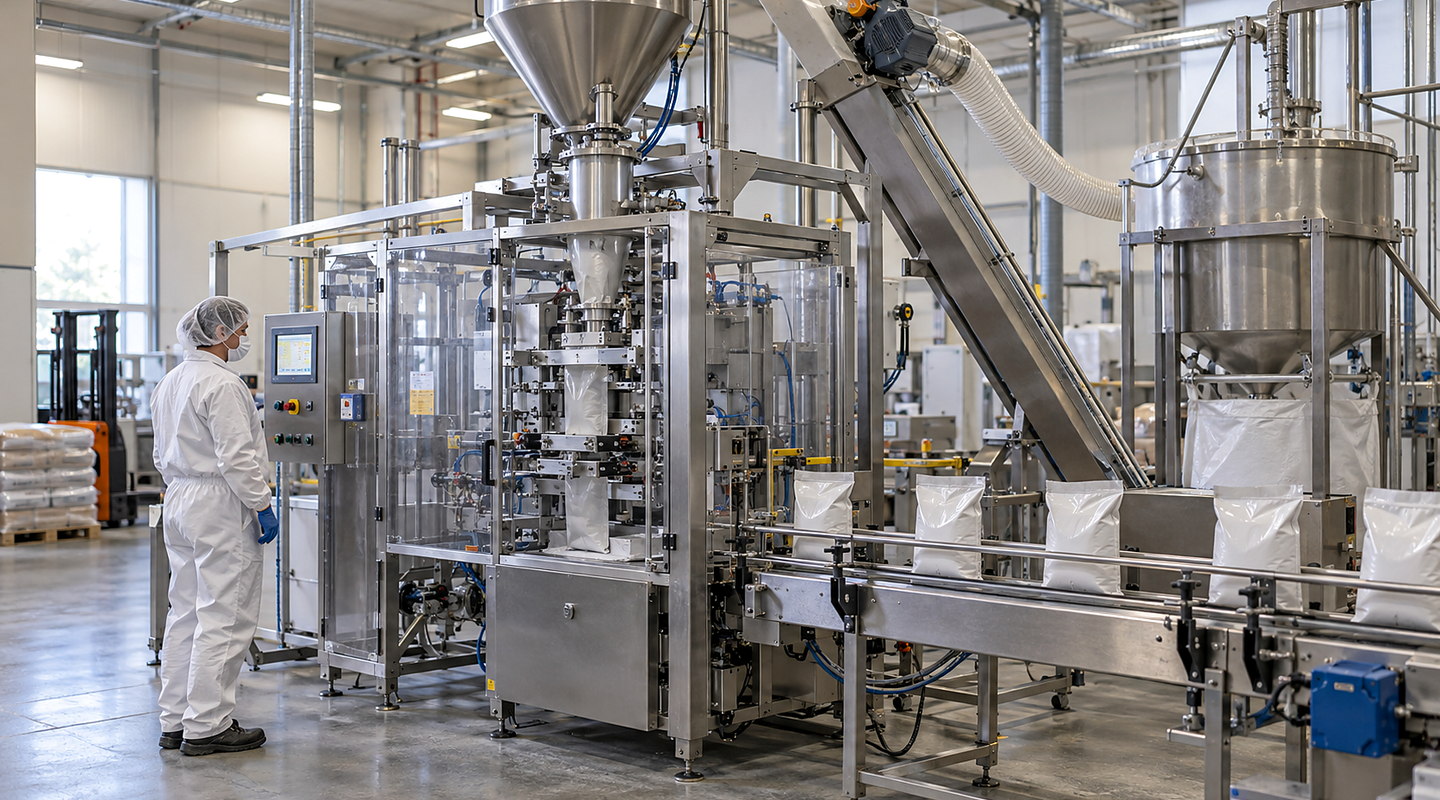
On short snack runs, changeover time includes clearing the previous product and producing the first accepted bag of the next one. Compare actual recipe, bag and target-weight changes.
Choose two recipes or pack sizes that make a difficult change. Record the last accepted bag of the first run, the clearance and adjustments, and the first accepted bag of the next run. Check pack weight, product condition, seal and the correct packaging before returning to the normal pace.
List the differences between runs, including snack or seasoning, target weight, film or premade bag, pack dimensions and product-contact parts. Agree who checks the change and what evidence releases the first pack.
Some changes affect the product path, others affect the bag or dose. Test the combination your team actually carries out and record the work between accepted packs.
Discuss your application

Choose an actual change involving fragile pieces, fines, seasoning or a different mix. Keep a sample of each recipe and note where residual product could remain between runs.
List bag style, dimensions, film or bag supply and the next target weight. Mark the guides, settings and packaging identification that must be checked for the new format.
Keep the last accepted pack of one run and the first accepted pack of the next. Record target and measured weight, and check mix or piece condition where the recipe requires it.
Record short-run length, time from last good bag to first good bag, product lost in clearance and additional adjustments. Compare the number of accepted bags over the full schedule.
Identify hoppers, chutes or other contact parts within the agreed cleaning boundary. The site should define its clearance method, inspection and release responsibilities for each recipe change.
Agree how the team deals with a partial dose, incorrect packaging or product in the seal. Define the restart check and the evidence required before the next pack is accepted.
Include replenishment, normal production, planned change, short stops, fault recovery, cleaning and maintenance for short runs and format changes involving snack weighing and bag forming. A fast automatic step can still leave your team with a slow or awkward overall process.
Run both formats with the actual snacks and packaging. Record time between accepted bags, product lost during clearance and any extra adjustment needed after restart.
Use the most fragile pieces and a pack-size or target-weight change from your own schedule. Check for additional fines, an incomplete dose and product in the sealing area.
Agree how an interrupted bag, incorrect packaging or residual product will be identified and separated. Confirm the restart and first-pack checks with the operator and quality team.
Compare with Routine Production Using Snack Weighing and Bag Forming if that operating pattern is closer to your application.